A toilet overflow that reaches subfloor can hide water you can't see. Learn how to find it, dry it out, and decide when professional help is necessary.
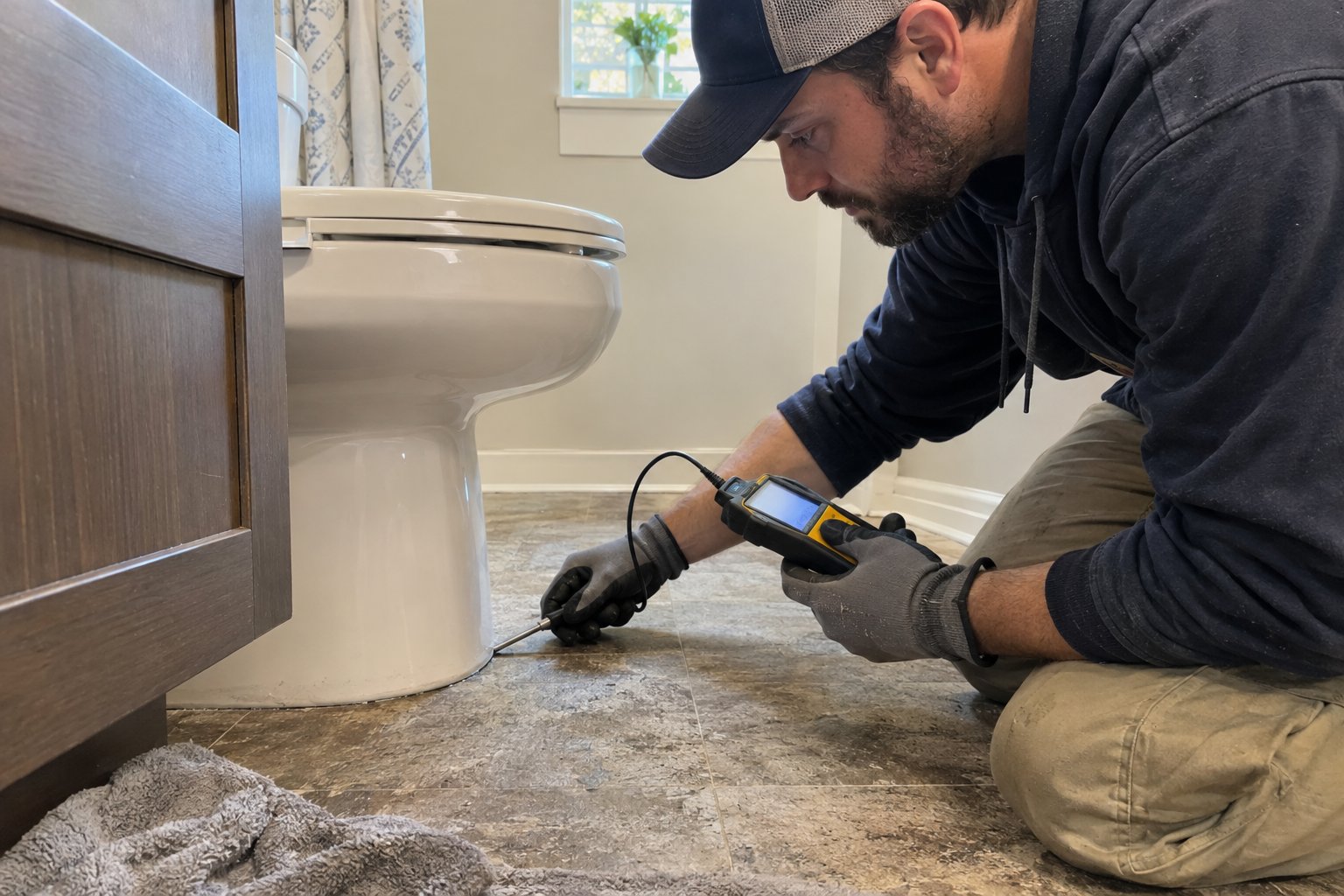
A toilet overflow that runs for more than a minute or two can push water past the base of the bowl and under the surrounding flooring before anyone notices. By the time you see a damp edge along the baseboard or a soft spot near the wax ring, water has often already soaked into the subfloor itself, where it cannot evaporate on its own the way a puddle on tile can. Knowing how to check for that hidden moisture, and how to dry it correctly, is what keeps a bathroom mishap from becoming a rotted subfloor or a mold problem months later.
This guide walks through how to find water that has traveled under flooring after a toilet overflow, what makes this situation different from a surface spill, and when the damage has gone past what a homeowner can safely dry out alone.
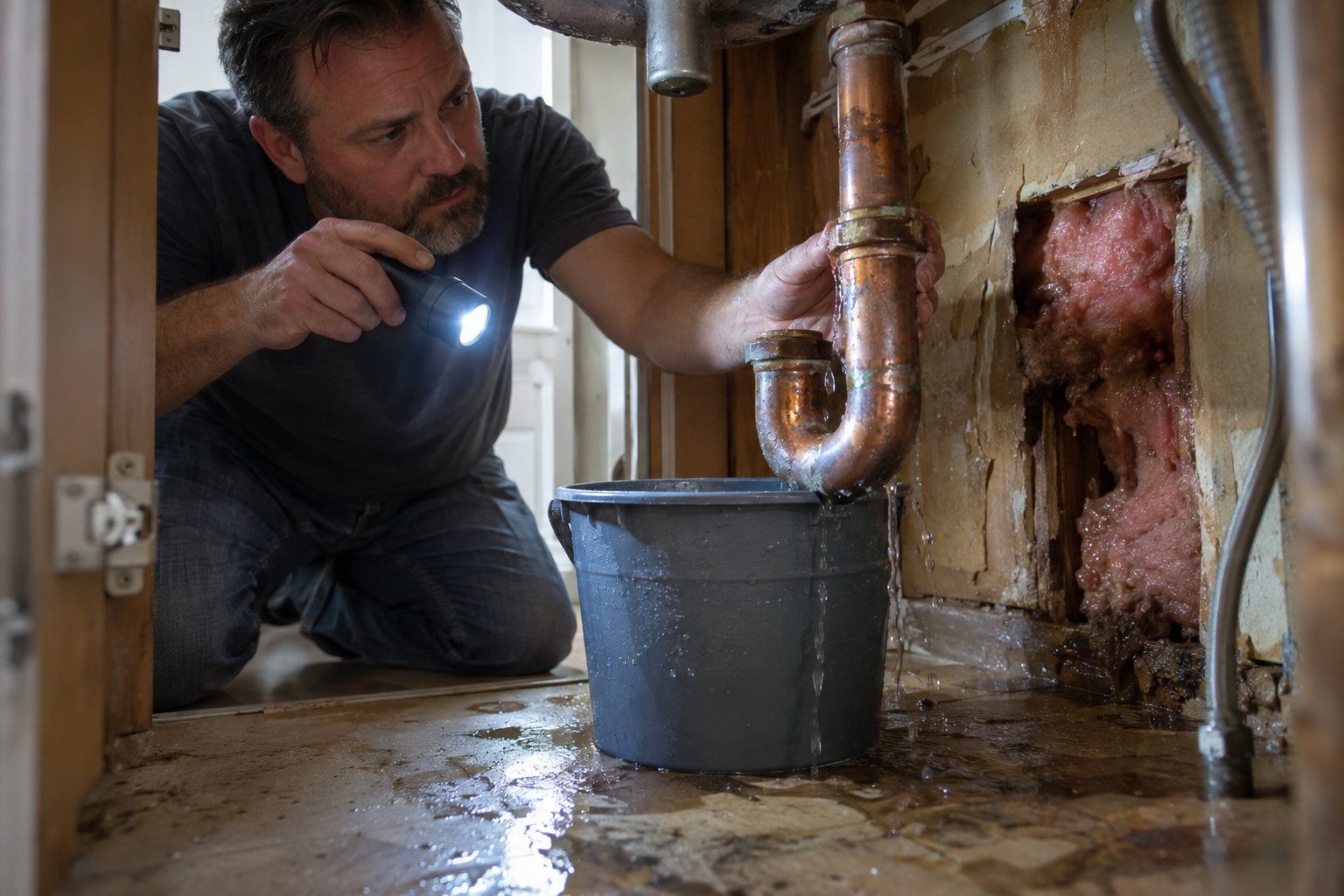
Water spreads under flooring through the wax ring seal at the base of the toilet, through grout lines in tile, or through gaps where the flooring meets the wall. Once it reaches the subfloor, it travels sideways along the wood or concrete far beyond the visible wet area, following the path of least resistance under cabinets and walls.
This is different from a spill that sits on top of vinyl or sealed tile. Overflow water does not need to pool visibly to cause a problem; it only needs a seam to slip through. Older bathrooms with worn caulk, cracked grout, or a toilet that has been reset more than once are especially prone to letting water underneath, which is part of why the same toilet can overflow twice with very different outcomes. If the water also reached the floor outside the bathroom, the same tracking behavior shows up in a flooded bathroom floor emergency, where the visible surface water is only part of the problem.
Water from an overflow caused by a clog is typically classified as Category 2 "gray water," meaning it carries some contamination and should not be treated the same as a clean water spill. If the toilet backed up from a sewer line problem rather than a simple clog, the water may be Category 3 "black water," which carries bacteria and should not be handled without protective gear.
This classification matters for what you do next. Clean water trapped under a floor is primarily a drying and mold problem. Contaminated water under a floor is also a sanitation problem, since subfloor material that has absorbed gray or black water generally cannot be fully disinfected and may need to be removed rather than dried in place. The broader framework restoration professionals use to separate these situations is covered in more detail when determining the severity using specific classes of water damage.
Press firmly on the flooring in a grid pattern around the toilet base, radiating outward toward the walls and under any adjacent vanity. Soft, spongy, or slightly bouncy spots indicate the subfloor underneath has absorbed water, even if the surface flooring itself still looks dry and intact.
A moisture meter is the more reliable way to confirm what your hands suspect. Pin-style meters can be pressed into grout lines or the edge of baseboard to get a reading from the material itself rather than guessing from the surface. The basics of taking an accurate reading, including where to place the pins and how to interpret the number, are explained in this guide on using a moisture meter like a professional. Check along the entire perimeter of the bathroom, not just near the toilet, since water tends to travel toward the lowest point in the room or toward a floor drain.
Pull back a section of baseboard near the toilet if you have the tools and confidence to do so. Discoloration, swelling, or a musty smell on the back of the baseboard or the bottom of the drywall is a sign water traveled further than the visible wet area suggested.
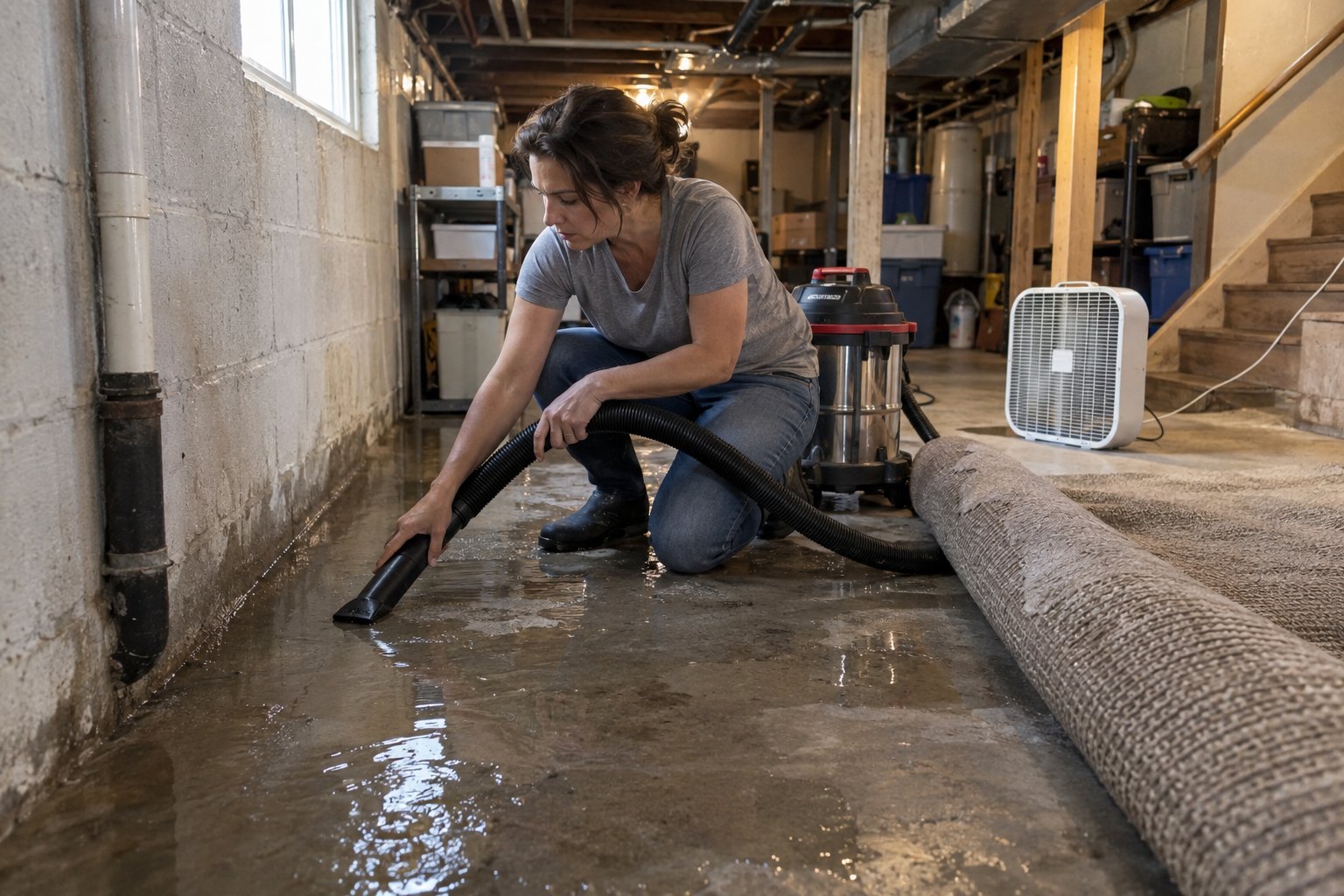
Surface water should be removed immediately with towels or a wet vac, but subfloor moisture needs airflow and often several days to dry, not just a fan running overnight. Running fans directly on a damp floor without addressing the water trapped underneath can dry the top layer while leaving moisture sealed in below, which is exactly the condition mold needs.
If the flooring is vinyl, tile, or laminate over a wood subfloor, drying from the top down is slow because the finished flooring itself blocks airflow to the wood underneath. In many cases a small section of flooring near the worst-affected spot needs to come up so air can reach the subfloor directly. This is also the point where many homeowners realize the job has outgrown a box fan and a dehumidifier from the hardware store.
Run a dehumidifier in the bathroom with the door closed as much as possible, and recheck moisture levels with a meter every day or two rather than assuming dry-to-the-touch means dry all the way through. Wood subfloor can read dry on the surface while still holding elevated moisture several days later.
Professional water damage remediation is worth calling for when the water was contaminated, when it has been sitting more than a day, when moisture readings stay high after a few days of fan drying, or when the subfloor is visibly swollen or soft. Any of these signs means the moisture or contamination has outpaced what portable equipment at home can fix.
Subfloor that stays wet for an extended period starts to delaminate or rot, which is a structural issue rather than a cosmetic one, and tile or vinyl that was reinstalled over compromised subfloor will eventually crack or shift. A professional assessment typically includes checking moisture content in the wood itself, not just the surface, and can confirm whether flooring needs to be removed or can be dried in place.
Gray or black water contamination adds another layer: porous materials that absorbed contaminated water generally need to be removed and replaced rather than cleaned, since bacteria can remain in the fibers of wood or underlayment even after it looks and feels dry.
Replacing a worn wax ring, resealing the caulk line around the base of the toilet, and fixing cracked grout nearby are inexpensive steps that reduce how easily future overflow water finds its way under the floor. A toilet that rocks slightly when you press on it usually has a failing wax seal, which is worth fixing before it causes a bigger problem.
Installing a water alarm near the base of the toilet is a low-cost way to get an early warning the next time a clog goes unnoticed, since these overflows often happen when nobody is in the room to catch it right away. Left unchecked, trapped moisture under a floor tends to announce itself eventually as a musty, lingering odor long before anyone sees visible damage.
If you have already found soft flooring, a persistent odor, or moisture readings that will not come down after a toilet overflow, request a water damage assessment before the subfloor damage spreads further.
Mold can begin developing in as little as 24 to 48 hours once subfloor material stays damp, which is faster than most homeowners expect given that the surface flooring may still look dry during that window.
Sometimes, if the moisture is limited and caught early, using a dehumidifier and targeted airflow; but finished flooring blocks much of the airflow a wet subfloor needs, so persistent moisture readings usually mean a section has to come up to dry properly.
Many policies cover sudden and accidental overflow damage, including subfloor repair, but coverage can depend on the cause; a gradual leak or neglected maintenance issue is often excluded, so it helps to document the incident and check policy language early.
A bouncy or spongy feel usually means the subfloor absorbed water and has started to lose structural integrity, which towel-drying and fans on the surface will not fix since the moisture is trapped in the wood itself.
Minor overflow from a simple clog with no sewage odor can typically be cleaned with gloves and standard disinfectant, but water from a sewer backup or anything with a foul smell should be treated as contaminated and handled with more caution or professional help.
Our service area includes:
Contact our experts now for 24/7 emergency response and insurance claim support.